Showing posts with label iso settings. Show all posts

Friday, 14 September 2012

Take Better Photographs - Tips and Tricks

If there is one thing that almost everyone can appreciate, it's a good photograph; using tips like the ones included in this article can help you take more memorable pictures. This will enable you to get the best shots and avoid common mistakes that people make when taking pictures.

  • It's important to use the correct camera settings when you are taking photographs of objects which are moving quickly. You can solve this issue preemptively by increase your ISO settings. You will also have clearer shots of quick subjects.
  • Most people see no need to utilize flash accessories when shooting photographs outdoors, but it is a tool that could enhance your images regardless of the setting. The sun high in the sky can create shadows that can obscure the details in your subject. If your camera has a setting for fill flash, set your camera to it. A fill flash will lighten all of the dark shadows caused by the sun, especially shadows around your subjects' facial features.
  • When you want to begin getting into photography, or you just want to learn to take better quality photos, try to learn all you can about proper composition. Composition is important in most art forms. Without a good composition, your pictures will look dull. When you want to improve your photography skills, learn, study and apply all you can about proper composition.
  • When photographing kids, it is often easier to just try to work around them, rather than forcing them into poses. Most children never stop moving, so it can be impossible to get that perfect portrait. Consider, instead, trying to get some action shots to enjoy memories of the children in their natural state.
  • A fantastic photography tip is to constantly look at other photographers for inspiration. If you look at other photographers' work, you can learn new strategies for capturing a scene.
  • Having good skills in photography does not involve a big secret. Continue experimenting and learning, and with experience over time, your pictures will markedly improve. It is not necessary to get all your pictures developed, or even keep them, which is especially true and convenient of digital cameras. You want to constantly experiment with new subjects and techniques, then judge and compare the results to see what worked best.
  • Fiddle around with different shutter speeds to learn their effects. If you want to capture something on the move, using a low f value will shorten the exposure time, which eliminates motion blur. Sporting events are probably the most common venue for employing this technique. Turn motion blur into an artistic statement by slowing your shutter speed. Waterfalls and streams make exquisite photographs when this method is used.
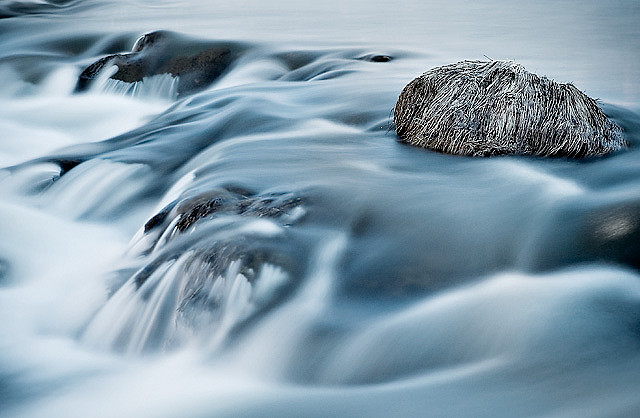
Turn motion blur into an artistic statement by slowing your shutter speed.

  • Creating depth in your photographs will add interest and perspective to landscape shots. Add scale into your photos by including an object or person in the picture foreground. Giving sharp focus to your photos can be as simple as changing your settings. Apertures less than f/8 for digital cameras, and f/16 for full framed SLR cameras, will give you the image you really want.
  • Try having borders on each of your pictures, even if they are natural. This doesn't mean framing a finished photo, but using the environment to frame the subject. Try looking at surrounding objects, such as trees or hills, to create a "natural frame" for your subject. This will improve your composition skills.
  • Be careful when packing cameras and other photography equipment prior to a trip. Take cleaning equipment and back-up batteries, as well as all the lenses you expect to make use of. Only take what you really need and what can be easily transported on the trip.
  • Do your best to make your models feel at ease, especially if you do not know them. Many people have an instinctive negative reaction to someone taking their picture. Be engaging, talk to them and ask for their permission to take their pictures. Let them know it is an art form and not because you want to invade their privacy.
  • You can get a much better photograph by getting down to their level and having them look directly into the camera. This will make a huge difference in the quality of your shots.
  • Photograph human subjects. Make sure to always get their permission, though. The pictures can become great memories of the places you've been or people you've seen. They will make excellent companions during a travel and can transport you to a unique moment preserved in time. Try to get laid back clothing and a candid facial expression.
  • Take a lot of pictures so that you are sure to have one that you like. Using digital cameras makes it much easier and less expensive to use this method so you are assured to capture that memorable moment you have been waiting for.
  • Understand how sharpness is distributed across your camera's image sensor. Generally, a camera's standard settings place the sharpest focus on subjects in the middle area of the frame. From there, it progressively distorts as it nears the edges of your camera frame.
  • Keep the knowledge of the settings on your camera simple. You should try to become knowledgeable about one part of a control, such as shutter speed or aperture, prior to moving on to the next one. The picture you want to take may no longer be there if you take too much time worrying over settings before you shoot; the scene may have changed or the person has gone away.
  • You can find all sorts of interesting things in and outside of your home that can make for amazing photographs. Never hesitate to experiment with different ideas. Snap some pictures with your camera!
  • Play around with perspectives, expressions, and scale to assess their effect on your pictures. Take the simplest of objects, and place it in an unusual place for an amusing photo, or play with the perspective of the picture to make the object seem much larger than it really is. Make compositions that make an ordinary object appear unique.
  • Just like with anything to which you are new, you must give yourself the time to familiarize yourself with the basics of photography. This holds especially true if your camera choice is an SLR one. It is crucial to become familiar with terms and skills like composition, exposure and aperture if you want to truly create memorable pieces of artwork.
  • When you want a great photo, make sure your camera is well-focused on its subject. If you keep your subject in focus, your pictures will have fantastic composure, while reflecting your personal style. Especially when starting out, your main subject should be in view and centered. The background will fall into place, so do not worry about it.

If you want to be good at photography, you will have do some research and put in effort so that you can get outstanding results. These hints will get you a improvement instantly and you can practice other pointers to see more progress. Don't forget to keep photography fun, enjoy every moment of it! If you can focus on using these tips and remember to keep things enjoyable and fun, you can be successful as a photographer.

Tuesday, 28 August 2012

Photography Tips - Learn How To Take Better Pictures

Are you ready to make your ideas come to life? Are you aware of how you should begin? Would you like to know more about the perfect shot? If you can't answer the previous two questions with an affirmative "yes," then read the below article to provide you with some needed assistance.

  • It's important to use the correct camera settings when you are taking photographs of objects which are moving quickly. You can solve this issue preemptively by increase your ISO settings. You will also have clearer shots of quick subjects.
  • Take a lot of photos when you are trying to improve your skills, but buy a memory card with a large storage space. A larger memory card will allow you to take as many pictures as you need without worrying about running out of space on the card. If you use a big memory card, you will be able to shoot using the RAW format. Using the RAW format will give you more flexibility when you are editing your photos.
  • If you discover a location that you would like to photograph and do not have your camera, make a note of it and return when you do have your camera. Taking a mini notepad along when you're out is an effective way to remember the places you want to go back to.
  • When you are trying to take close-up shots you should use optical zoom instead of digital zoom. Cameras will usually let you zoom closer and closer optically until the digital zoom takes over. The problem is that this compromises the overall picture quality. When a camera is in digital mode, it interpolates pixels before it affixes them to the picture, and this can lessen the quality of the image. There is probably a way to turn off this feature. Check your camera's manual.
  • Find the right person or thing to photograph. Without the right subject you will be unable to compose a beautiful portrait even if you have the best equipment available. Think about it for a bit then carefully choose objects that naturally inspire you. You can also look for someone to model and pose for you.
  • Try taking photos at different angles to make them more creative. Any person can take a picture of a scene head-on. Look down to the ground, or look up at something to get an interesting perspective. An interesting technique involves framing your shots in a quick, diagonal motion; thus making it appear to have an almost unnatural composition.

An interesting technique involves framing your shots in a quick, diagonal motion; thus making it appear to have an almost unnatural composition.

  • It is important to give your photos depth when capturing landscapes. Have a person or other object put into the foreground in order to gauge the overall scale of the image. Aperture sizes like f/8 on a consumer camera, or f/16 on a professional DSLR, make it so you need not sacrifice foreground sharpness for background sharpness or vice-versa.
  • When shooting photographs outdoors, lighting is the main element. What could be a beautiful photo can easily be ruined when lighting is too dark, too light or fuzzy. It is good practice to keep the light behind you when taking a picture. Putting subjects in the shade is also a good idea. This will give you some of the best lighting, making for beautiful pictures.
  • Shoot quickly when you take a photo. The ultimate shot may last a short period of time, so make sure you are always ready for it. People can tire holding a smile, animals can run, or you could lose that "perfect" candid moment and then the moment will have passed. Don't worry about perfecting the settings if it means risking losing a good shot.
  • When shooting a wedding, warm up by taking pictures of small details, like an invitation or a purse. Take a picture of some flowers. You just might stumble on a great shot as well.
  • Don't just assume you do not need to use a flash outdoors. Direct sunlight creates strong shadows, easily obscuring faces and other important details. The flash can illuminate the dark shadows, filling them in with light so your overall lighting is more even in the picture. This will ensure that light gets into every crease on your subject's face, showing all the details in the finished product.
  • There is a wide variety of editing software available for photos. You can either purchase or download it for free. Have some fun experimenting with it! You'll find that even professional photographers are using software to make their photographs better, and you can use the same products they're taking advantage of. Occasionally, a picture can change from something that is just alright to something that is incredible with just a couple of minor touch-ups.
  • There's this myth floating around that sunny days are best for taking photos. But the truth is that too much sunlight will interfere with even the most scenic photos. The sun can cause shadows, squinting, and highlights that do not flatter the subject. Whenever you possibly can, try taking your outdoor shots in the morning or the evening when the sun is lower and casts less light.
  • Attempt to capture your subject from a different angle to change the effect. Anyone can take a head on photo of a scene. Instead, try shooting a subject from up above, or look for a way to get below the subject and shoot from the ground. Frame shots sideways or diagonally to create a dynamic, unusual composition.
  • If you don't practice though, you can't ever get better. With digital photography, you can take as many pictures as you want, so there is nothing holding you back. Since you don't have to worry about wasting film or paying to develop photos, you can learn through experimentation as much as you like.
  • Learn composition and that less is much more with photographs. Make sure that you do not have too much clutter going on in your photos as the setting stands, or by adding it yourself. Simplicity is an art in itself, so apply this to your photographs.
  • You can find all sorts of interesting things in and outside of your home that can make for amazing photographs. Never hesitate to experiment with different ideas. Snap some pictures with your camera!
  • Make your shutter speed higher if want to take pictures in dark settings. Low light tends to make pictures blurry; a high shutter speed will counteract this. Shutter speeds that are 1/200th or 1/250th of a second are the recommended minimums in this situation.
  • If you are designated as the principle coordinator of an upcoming photo shoot, take care to make notes about what each person hopes to achieve in the final results. This will help you keep in mind what you really want to see.
  • When you want a great photo, make sure your camera is well-focused on its subject. If you keep your subject in focus, your pictures will have fantastic composure, while reflecting your personal style. Especially when starting out, your main subject should be in view and centered. The background will fall into place, so do not worry about it.

It is crucial to understand proper focus and good lighting to create magnificent pictures. Learn to portray your world through photography by experimenting with lighting techniques, focus control and creative composition.